Introduction: The Battle for Sourcing Supremacy
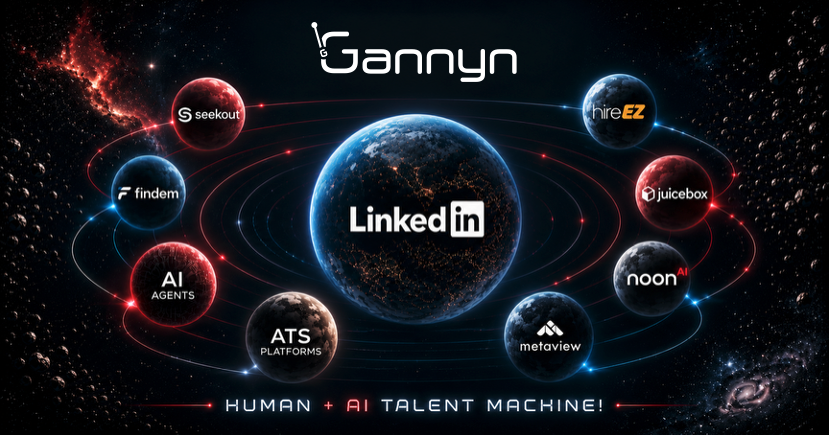
The battle for sourcing supremacy is raging across HR technology. LinkedIn is expanding deeper into AI. ATS providers are embedding sourcing capabilities directly into their platforms. Startups are launching agentic recruiting products at a record pace. Meanwhile, talent leaders are left trying to answer a deceptively simple question: do we need better sourcing tools, or do we simply need better sourcing?
Every year, new sourcing tools enter the market promising deeper talent pools, better candidate matching, more accurate contact data, smarter automation, and now increasingly, AI-powered sourcing capabilities. At first glance, it looks like an all-out arms race. Every platform claims to have a better talent graph, more powerful search functionality, superior outreach workflows, or some breakthrough that will finally disrupt the status quo.
After spending two decades in Talent Acquisition, building sourcing functions, implementing recruiting technologies, and evaluating countless sourcing products, I’ve come to a somewhat different conclusion.
Most sourcing tools are attempting to solve the same problem. They simply approach it in slightly different ways. Some prioritize talent intelligence. Others focus on contact enrichment, CRM functionality, workflow automation, diversity insights, AI-powered search, or candidate engagement. The interfaces differ. The workflows differ. The pricing differs. But at their core, they’re all trying to accomplish the same thing:
Build pipelines of passive talent.
That’s what sourcing has always been about. The tools may evolve. The technology may become more sophisticated. AI may accelerate parts of the process. But the fundamental objective remains unchanged. Talent teams need a reliable way to identify, engage, and nurture relationships with people who are not actively applying to jobs.
The interesting part is that while the sourcing technology category continues to expand, many of these platforms are still chasing the same market leader.
LinkedIn.
In fact, many sourcing tools integrate directly with LinkedIn, enrich LinkedIn data, automate LinkedIn workflows, or position themselves as a complementary layer rather than a complete replacement.
Which raises an interesting question:
If LinkedIn remains the foundation of modern sourcing, are these platforms truly competing with LinkedIn, or simply extending it?
That’s one of several questions we’ll explore throughout this research article. We’ll examine the evolution of sourcing as a function, the rise of LinkedIn as the dominant sourcing platform, the leading sourcing technologies shaping the market today, and the growing trend of ATS providers building sourcing capabilities directly into their own platforms.
We’ll also discuss how sourcing itself has evolved into a specialized business function, why some organizations need dedicated sourcing infrastructure while others do not, and how AI is beginning to reshape the category once again.
Most importantly, we’ll tackle the strategic question that many talent leaders are asking:
Do you need sourcing tools, or do you simply need sourcing? Those are two very different challenges.
In some organizations, LinkedIn Recruiter and a well-managed ATS are more than enough. In others, scaling hiring efforts requires dedicated sourcing technology, specialized workflows, talent intelligence platforms, and the operational infrastructure to support them.
For many companies, the most effective solution isn’t building a sourcing function at all. It’s partnering with sourcing specialists who already have the tools, processes, and expertise required to build passive talent pipelines at scale. That’s a model I’ve personally embraced through my consulting company gannyn.com.
In addition to helping organizations evaluate and integrate the world’s most powerful AI sourcing technologies, I also offer Sourcing Sprints. These are targeted Human + AI sourcing and screening campaigns designed to rapidly build passive talent pipelines for high-volume or specialized hiring initiatives (e.g. GTM or technical recruiting) and strategic growth projects. Many companies don’t wake up wanting another piece of software.They simply want talent and I use many of the great tools mentioned throughout this article to help them achieve that.
For those building a scalable sourcing function, the tools discussed throughout this article offer different approaches to achieving that goal so let’s explore the market, examine the contenders, and see whether any one of them has truly achieved sourcing supremacy.
In This Article
The History of Sourcing: How Recruiting Became Outbound
How sourcing evolved from a recruiting tactic into a specialized function and why it became essential for modern talent acquisition teams.
LinkedIn Recruiter: The Supreme Leader Everyone Is Chasing
Why LinkedIn remains the dominant force in sourcing and why nearly every competitor still builds around its ecosystem.
Top Contenders: Which One is Right for You?
A practical review of today’s leading sourcing technologies, including where they excel, where they differ, and which environments they are best suited for.
Sourcing as a Function: The 5 Pillars of Trust
What separates successful sourcing organizations from unsuccessful ones, including the five trust-building factors that consistently drive candidate engagement.
The Future of Sourcing: ATS Ecosystems, AI Agents, and Human-in-the-Loop Recruiting
Why sourcing, talent intelligence, AI, and recruiting technology are increasingly converging into unified talent ecosystems.
As we’ll discover, the answer to sourcing supremacy may not be as simple as declaring a single winner. Some organizations need sophisticated sourcing technology. Others simply need access to sourcing expertise. Some can achieve remarkable results with LinkedIn alone, while others require an entire sourcing ecosystem to support hiring at scale.
As the tools continue to evolve and AI continues to advance, talent acquisition itself continues to transform.
Yet the fundamental challenge remains unchanged: identifying, engaging, and building relationships with passive talent before your competitors do.
What’s becoming increasingly clear is that sourcing is no longer just about finding people. It’s about creating systems capable of consistently attracting, engaging, and converting talent in a market where attention is limited and trust matters more than ever.
Many vendors believe AI will ultimately solve this challenge. Others believe the future still belongs to recruiters, sourcers, and talent leaders who understand the human side of hiring.
Personally, I think the truth lies somewhere in between.
The organizations creating the greatest competitive advantage aren’t choosing between humans and AI. They’re learning how to combine both. They’re building sourcing functions, workflows, and talent ecosystems that leverage technology without losing the human connection that makes recruiting work in the first place.
In other words, they’re building Human + AI Talent Machines.
Whether the future belongs to sourcing platforms, talent intelligence systems, ATS ecosystems, AI agents, or some combination of all four remains to be seen. But one thing is certain: the battle for sourcing supremacy is far from over.
So let’s start where every great sourcing strategy begins—understanding how we got here.
The History of Sourcing: How Recruiting Became Outbound
There was a time when recruiting was almost entirely reactive.
Companies posted jobs. Candidates applied. Recruiters reviewed resumes, coordinated interviews, and managed the hiring process from application to offer. For many years, that model worked reasonably well. Labor markets were less competitive, talent was easier to find, and professional identities largely existed on paper resumes rather than digital profiles.
Then the internet changed everything.
As platforms like Monster, CareerBuilder, and later LinkedIn transformed professional identity into searchable digital data, recruiters gained something they had never really had before – direct access to talent.
Suddenly, organizations no longer had to wait for candidates to raise their hand and apply. Recruiters could proactively identify people with specific skills, experience, backgrounds, and career trajectories. More importantly, they could initiate the conversation themselves. This was the birth of sourcing.
At its core, sourcing became the outbound motion of recruiting. In many ways, it borrowed directly from the go-to-market strategies used by sales organizations. Instead of waiting for inbound interest, companies began proactively identifying ideal talent, researching target markets, building prospect lists, and initiating conversations long before a hiring need became urgent.
What started as a recruiting tactic eventually evolved into a specialized discipline focused on:
- Talent mapping
- Passive candidate engagement
- Pipeline creation
- Market intelligence
- Competitive hiring insights
- Candidate relationship management
- Workforce planning support
The objective was simple. Build relationships with talent before you need them. That idea may sound obvious today, but at the time it represented a major shift in how organizations thought about hiring.
Rather than treating recruiting as a transactional process, leading companies began treating talent as a strategic asset. No industry embraced this shift more aggressively than technology. As demand for software engineers, product leaders, architects, data scientists, and other highly specialized talent exploded throughout the 2000s and 2010s, sourcing became a competitive advantage. Companies that could consistently identify and engage passive talent gained access to candidates their competitors never even knew existed.
This is where I personally watched sourcing transform from a skill into a profession. Dedicated sourcing teams emerged. Specialized sourcing leaders emerged. Entire careers were built around the craft. To be completely honest, I’ve worked alongside some incredible sourcers over the years. The best ones felt less like recruiters and more like investigators, researchers, strategists, and relationship builders. They could uncover talent in places nobody else was looking, identify patterns others missed, and build relationships months or years before an opportunity existed. Some of them are absolute magicians.
Technology accelerated that evolution. The introduction of LinkedIn Recruiter fundamentally changed the game by providing organizations with access to a global database of professional profiles at unprecedented scale.
Soon after came a wave of sourcing innovation:
- Advanced Boolean search tools
- Browser extensions
- Email enrichment platforms
- Contact discovery solutions
- Automated outreach sequencing
- Talent intelligence systems
- Candidate rediscovery platforms
- Internal mobility tools
- AI-assisted sourcing technologies
Each generation of tooling promised to make sourcing faster, smarter, and more scalable. In many cases, it did. What once required hours of manual research could suddenly be accomplished in minutes. Talent pools became larger. Search became more sophisticated. Data became more accessible.
Eventually, sourcing evolved beyond a recruiting capability and became a formal operating function inside many organizations. Entire sourcing organizations were built around it, which is what expanded budgets, created emerging technology and specialized vendors.
The sourcing category exploded. Today, that evolution continues at an even faster pace. Artificial intelligence is transforming search, outreach, enrichment, workflow automation, and candidate engagement. New agentic recruiting products are emerging with ambitions to automate significant portions of the sourcing process altogether.
Some even suggest that AI agents may eventually replace sourcing functions entirely. Perhaps there will be situations where that proves true, but if the history of sourcing has taught us anything, it’s that technology alone has never been the deciding factor.
The tools have changed. The platforms have changed. The workflows have changed. Yet the fundamental objective has remained remarkably consistent. People want to connect with people, which becomes even more important as roles become more specialized, more senior, and more strategic. Skilled talent, executives, and highly sought-after professionals rarely make career decisions because an algorithm surfaced a profile. They make those decisions because someone earned their attention, established trust, and presented an opportunity worth considering.
Sourcing has survived every technological shift thrown at it because despite all the innovation, sourcing has never really been about just finding people, it’s been about engaging people, and that distinction will become increasingly important as we examine the next chapter in the sourcing story.
The platform that changed the profession forever and remains the benchmark every sourcing tool is still chasing today.
LinkedIn.
LinkedIn Recruiter: The Supreme Leader Everyone Is Chasing
This brings us to the platform that changed sourcing forever.
LinkedIn.
No discussion about sourcing technology is complete without it. In fact, I would argue that every sourcing tool on the market is reacting to LinkedIn in some way. Some platforms attempt to compete with it directly. Others attempt to complement it. Most integrate with it. But regardless of their positioning, almost every sourcing vendor must answer the same question:
How do we create value in a world where LinkedIn already exists?
That’s the irony of the sourcing market. For years, vendors have promised to disrupt LinkedIn. Yet despite those ambitions, LinkedIn remains the gravitational center of modern recruiting.
The reason is simple. LinkedIn isn’t just a sourcing tool. It’s become the professional identity layer of the internet. Over time, LinkedIn evolved into something much larger than a recruiting platform.
Today it functions simultaneously as:
- A sourcing platform
- A recruiting platform
- A professional social network
- A personal branding platform
- A content ecosystem
- A sales enablement tool
- A labor market intelligence engine
- A professional networking community
Nobody else has successfully replicated that combination at scale, and that matters because sourcing isn’t simply about finding talent. It’s about engaging talent where trust already exists.
When recruiters reach out through LinkedIn, candidates generally understand the context. They recognize the platform. They understand why they were contacted. In many cases, their professional history, skills, accomplishments, and network are already visible.
That lowers friction. It creates familiarity, and perhaps most importantly, it creates trust.
Over the years, I’ve worked with organizations ranging from startups to enterprise environments, and one thing has remained remarkably consistent:
Most companies can accomplish a significant percentage of their sourcing needs using nothing more than LinkedIn Recruiter, a well-managed ATS, thoughtful outreach practices, and disciplined pipeline management.
For many organizations, LinkedIn is simply good enough. In fact, I’d go a step further. For a large percentage of companies, LinkedIn is not only good enough. It’s probably the most practical sourcing solution available.
That’s not something you’ll hear many sourcing vendors say, but it’s been my experience. Where things begin to change is when organizations attempt to scale. The moment hiring volumes increase, recruiting complexity expands, or specialized talent becomes difficult to find, new challenges emerge.
Questions start appearing such as:
- How do we map entire talent markets?
- How do we engage talent outside our immediate network?
- How do we build nurture campaigns?
- How do we rediscover previously engaged candidates?
- How do we automate workflows without losing personalization?
- How do we enrich contact information?
- How do we support diversity initiatives?
- How do we integrate sourcing data across multiple systems?
- How do we create repeatable sourcing processes at scale?
That’s where specialized sourcing platforms enter the conversation. Not necessarily to replace LinkedIn, but to extend it, and that distinction is incredibly important because almost every sourcing tool I’ve evaluated over the years still relies on LinkedIn in some form. Whether it’s profile data, integrations, workflows, behavioral patterns, enrichment, or recruiter adoption habits, LinkedIn remains deeply embedded in the sourcing ecosystem.
The reality is that most sourcing vendors aren’t replacing LinkedIn, they’re building operational layers around it.
I’ll be the first to admit, LinkedIn isn’t perfect. Anyone who has spent significant time inside Recruiter has likely experienced a few head-scratches along the way.
There are InMail limits. The rising cost of recruiter seats. The engagement thresholds and response-rate metrics that can impact the user experience. There are occasional questions around transparency, product packaging, and pricing as LinkedIn simultaneously promotes automation, efficiency, and AI while continuing to expand premium recruiter seat offerings.
None of these challenges are necessarily deal breakers, but they do create opportunities for competitors, and competitors have noticed.
For years, sourcing vendors have built businesses around solving the gaps LinkedIn leaves behind. Whether that’s deeper talent intelligence, broader contact data, workflow automation, CRM functionality, analytics, or candidate engagement capabilities.
In many ways, the entire sourcing category exists because LinkedIn can’t be everything to everyone, and now, perhaps the most interesting chapter in LinkedIn’s evolution is beginning to unfold.
LinkedIn Hiring Assistant: The AI Era Arrives
In late 2024, LinkedIn introduced Hiring Assistant, its first agentic AI recruiting product designed to help recruiters source candidates, create projects, draft outreach, evaluate applicants, and automate portions of the recruiting workflow. LinkedIn describes it as an AI assistant that handles repetitive recruiting tasks so recruiters can spend more time on higher-value activities such as candidate engagement and hiring manager consultation. (LinkedIn)
The product represents an important shift. For years, sourcing vendors positioned AI as a differentiator against LinkedIn. Today, LinkedIn is increasingly incorporating those same capabilities directly into its own ecosystem.
According to LinkedIn, early Hiring Assistant customers reported significant reductions in sourcing time, fewer profiles needing review before reaching a qualified shortlist, and improved candidate engagement rates through AI-assisted workflows. (LinkedIn News)
From my perspective, however, the most important aspect of Hiring Assistant isn’t the automation itself. It’s what LinkedIn is signaling about the future.
LinkedIn appears to be making a very deliberate bet that recruiters don’t necessarily want more tools. They want fewer manual tasks. Whether Hiring Assistant ultimately becomes the dominant AI sourcing solution remains to be seen. The broader sourcing market is moving quickly, and innovation is happening everywhere.
One thing is clear:
LinkedIn has no intention of sitting on the sidelines while AI reshapes recruiting, and if history is any indication, betting against LinkedIn has rarely been a winning strategy.
Which raises a larger question:
If LinkedIn continues expanding into talent intelligence, workflow automation, AI sourcing, candidate engagement, and recruiting operations, are sourcing platforms actually replacing LinkedIn? Or are they simply building increasingly sophisticated layers around the platform that already owns professional identity?
The answer, as we’ll see in the next section, is probably somewhere in the middle.
Top Contenders: Which One is Right for You?
If LinkedIn is the platform everyone is chasing, then the next logical question becomes:
Who are the contenders?
The answer is more complicated than it first appears.
The sourcing technology market has evolved into one of the most crowded and innovative categories in HR technology. New vendors continue to emerge, established players continue to expand, and artificial intelligence has accelerated product development across the board. What once looked like a handful of sourcing databases has transformed into a diverse ecosystem of talent intelligence platforms, sourcing engines, CRM systems, workflow automation tools, candidate engagement solutions, and increasingly, AI-powered recruiting assistants.
Before we begin, it’s important to clarify something. This is not a ranking from best to worst.
Every sourcing platform has strengths, weaknesses, ideal environments, and unique approaches to solving the sourcing challenge. Some are built for enterprise organizations managing global hiring initiatives. Others are designed for lean recruiting teams looking to move quickly. Some emphasize talent intelligence. Others focus on automation, data enrichment, workflow orchestration, or AI-assisted recruiting.
The purpose of this section is not to declare a universal winner. The purpose is to understand the landscape.
Some of today’s most recognizable contenders include:
This list only scratches the surface. Additional vendors and emerging platforms continue entering the market at a rapid pace. New AI-powered sourcing tools appear almost monthly. Established ATS providers are building sourcing functionality directly into their platforms. Talent intelligence vendors continue expanding beyond sourcing into workforce planning, internal mobility, analytics, and hiring operations.
What’s becoming increasingly clear is that many sourcing platforms are converging around similar capabilities.
Most now offer some combination of:
- AI-assisted sourcing
- Automated outreach
- Candidate enrichment
- Talent rediscovery
- Talent intelligence
- CRM functionality
- Workflow automation
- ATS integrations
- Pipeline analytics
- Generative AI messaging
From a distance, the products can start to look remarkably similar, but when you get closer, important differences begin to emerge.
Some platforms prioritize deep talent intelligence and workforce data. Others focus on speed and simplicity. Some emphasize recruiter productivity. Others focus on helping organizations build repeatable sourcing operations at scale. Certain products are particularly effective for technical recruiting environments, while others are designed to support broader hiring functions across multiple business units.
In many cases, the differentiation comes down to factors such as:
- User experience
- Data quality
- Ecosystem integrations
- AI sophistication
- Enterprise scalability
- Workflow flexibility
- Industry specialization
- Configuration requirements
- Service and support
Perhaps most importantly:
Can the platform successfully integrate into the way your recruiting organization already operates?
Sourcing tools are only as valuable as the systems, processes, and people surrounding them. This is one of the biggest misconceptions I encounter when advising talent leaders. Many organizations evaluate sourcing technology as if the software itself will solve the problem. In reality, technology is only one piece of the equation.
The best sourcing platform in the world cannot compensate for unclear hiring requirements, poor recruiter alignment, weak outreach practices, inconsistent follow-up, or a lack of sourcing discipline. Conversely, strong sourcing teams often produce exceptional results with relatively simple technology because they understand the fundamentals of talent engagement.
That’s why selecting a sourcing platform should never be treated as a software decision alone. It’s an operational decision. It’s a workflow decision. It’s a talent strategy decision, and increasingly, it’s an AI strategy decision.
Different Approaches to the Same Problem
One of the most interesting observations from reviewing sourcing technology over the years is how differently vendors attempt to solve essentially the same challenge. Building passive talent pipelines.
Some platforms focus heavily on search and talent discovery. Others specialize in talent intelligence and workforce insights. Some prioritize outbound engagement and sequencing. Others emphasize contact data, enrichment, and candidate information. Increasingly, many are expanding beyond sourcing altogether.
Today, it isn’t uncommon to see sourcing platforms introducing adjacent capabilities such as:
- Candidate screening
- Interview intelligence
- Skills assessments
- Internal mobility solutions
- Recruiting CRM functionality
- Hiring analytics
- Talent intelligence dashboards
- AI recruiting assistants
- End-to-end recruiting workflows
- Agentic recruiting capabilities
In some cases, vendors are testing the boundaries of what sourcing software can become. Rather than simply helping recruiters find talent, they’re attempting to support the entire recruiting lifecycle.
Some are even positioning themselves as autonomous recruiting systems capable of sourcing, engaging, screening, and advancing candidates with minimal human intervention. Whether that future ultimately materializes remains to be seen.
What is clear is that sourcing technology is no longer a standalone category. It is increasingly blending into broader conversations around talent intelligence, recruiting operations, workforce planning, and artificial intelligence. Which creates both opportunity and confusion for buyers.
Because the question is no longer:
“Which sourcing tool should we buy?”
The question are:
“What problem are we actually trying to solve?”
Do you need deeper talent intelligence?
Do you need better workflow automation?
Do you need improved recruiter productivity?
Do you need a more scalable sourcing process?
Or do you simply need more qualified candidates entering the funnel?
The answers will determine which technologies make sense and which ones don’t.
A Few Observations From the Field
After reviewing product demonstrations, implementation strategies, workflow designs, and market positioning across countless sourcing technologies, one thing has become abundantly clear. Not all sourcing tools are created equal, but they are all attempting to solve versions of the same problem.
Some go deeper technically. Some simplify workflows. Some prioritize outbound engagement. Some focus on enrichment and contact data. Some are evolving into comprehensive recruiting ecosystems.
Yet ultimately, they all exist for one reason:
To help organizations build passive talent pipelines more effectively. That’s the mission.
Despite all the innovation happening across the category, the fundamentals still matter. Finding talent is important. Engaging talent is essential. Building trust remains everything.
That’s why choosing the right platform isn’t always about selecting the most powerful product. It’s about selecting the right product for your environment, your hiring goals, your team structure, and your operating model.
In many cases, that’s exactly where outside expertise becomes valuable.
Through Gannyn.com, I help Talent Acquisition and HR leaders evaluate sourcing technologies, understand the trade-offs between platforms, and determine which solutions best align with their hiring strategy. More importantly, I help organizations implement those technologies in a way that creates measurable business outcomes rather than simply adding another tool to the tech stack.
Because sourcing success rarely comes from software alone. It comes from combining the right people, the right process, and the right technology.
Or as I like to call it: A Human + AI Talent Machine!
Sourcing as a Function: The 5 Pillars of Trust
After spending nearly two decades building sourcing functions, leading recruiting operations, implementing technology, and running outbound talent campaigns, I’ve come to a simple conclusion.
The tools matter, but the messaging matters more:
Throughout my career, I’ve studied sourcing performance through outreach campaigns, recruiter feedback loops, candidate surveys, response-rate analysis, and thousands of conversations with both active and passive talent. While technologies, platforms, and workflows continue to evolve, one consistent theme has emerged.
Passive talent primarily wants transparency:
That may sound obvious, but it’s surprising how often organizations overlook it.
Today’s candidates are inundated with recruiter outreach. The average skilled professional may receive dozens of recruiting messages every month. Most are generic. Many are automated. Some are clearly generated by AI. As a result, passive talent has become exceptionally good at filtering out noise.
Research consistently shows that personalization and relevance have a far greater impact on engagement than volume alone. Personalized outreach campaigns often generate response rates significantly higher than generic recruiter messaging, while thoughtful multi-touch engagement can dramatically improve candidate participation. (SHRM)
In my own research and sourcing initiatives, 90% of highly skilled professionals indicated they would at least consider engaging with recruiter outreach when several key criteria were present.
Now, to be clear, I’ve never personally seen 90% response rates in practice, but by following my methodology, I have seen campaigns achieving response rates in the 60–65% range. By comparison, industry benchmarks for recruiter outreach often fall between roughly 10% and 25% depending on the channel, audience, and quality of personalization. (LinkedIn)
Sourcing success is far less about finding talent and far more about creating reasons for talent to engage. Through my research, five factors consistently emerged as the strongest drivers of candidate response.
Compensation Transparency
This was overwhelmingly the most important factor.
Skilled professionals want to know whether an opportunity is financially meaningful before investing time in a conversation. It’s not necessarily about maximizing compensation. It’s about understanding whether the opportunity aligns with their market value and career expectations. When compensation information is absent, candidates are forced to make assumptions. Most won’t bother.
Recruiters who avoid compensation conversations until later in the process often find themselves spending significant time on candidates who ultimately discover the opportunity was never aligned in the first place.
Transparency creates efficiency. For both sides.
Company Credibility (Brand-first)
The second factor was trust. Candidates want to know who they’re speaking with and why they’re being contacted.
- Is the recruiter connected directly to the hiring organization?
- Do they understand the role?
- Can they answer questions about the business?
- Is this a legitimate opportunity or simply another mass outreach campaign?
Candidates are evaluating the recruiter just as much as the recruiter is evaluating the candidate so the stronger the employer brand, the easier this becomes, but even lesser-known organizations can establish credibility when the outreach demonstrates knowledge, professionalism, and authenticity.
People respond to confidence, clarity, and most importantly, they respond to trust.
Location and Remote Expectations
Location has always mattered, but after the pandemic, flexibility became equally important.
Whether organizations embrace fully remote work, hybrid models, or office-first cultures, candidates want clarity. Skilled talent increasingly evaluates opportunities based not only on compensation and responsibilities, but also on lifestyle alignment.
The return-to-office debate will likely continue for years, but what remains clear is that flexibility expands talent pools and often increases engagement opportunities.
When recruiters clearly communicate expectations upfront, they remove uncertainty and create better conversations.
Title and Career Value
People want to understand where an opportunity fits within their career trajectory.
A title is more than a label. It’s a signal.
Candidates assess seniority, scope, influence, growth opportunities, and market positioning almost immediately. Nobody wants to accidentally move backward, diminish their earning potential, or take on less responsibility than they currently have.
Whether the title itself matters less than the opportunity behind it depends on the individual, but understanding the perceived value of the role is almost always part of the decision-making process.
The “Why” Factor
This is where sourcing becomes incredibly human. Internally, I’ve always referred to this as the “Why” factor because it ultimately comes down to answering three questions:
- Why me?
- Why your company?
- Why now?
This is where personalization, emotional intelligence matters and curiosity matters. Frankly, this is where many sourcing efforts still succeed or fail.
Candidates want evidence that someone took the time to understand who they are, what they do, and why they may be relevant to a specific opportunity. They want context, purpose and a reason to care.
Technology can help surface, prioritize and even help draft outreach, but genuine relevance still requires human judgment.
What Not To Do
We’ve all received that message. The one that immediately tells you the sender never read your profile or maybe AI jumbled it. Maybe they got your name wrong. Maybe they referenced the wrong company. Maybe they confused your title, your experience, your timeline, your pronouns, or your background entirely. Increasingly, many of these mistakes come from poorly configured automation and generative AI systems.
The irony is that the technology is becoming more sophisticated while some outreach is becoming less thoughtful. That’s a dangerous combination, because sourcing is not data extraction.
It’s relationship initiation and that matters for a number of reasons, but the single biggest mistake I see is purposely misleading or bait and switch practices.You know the one…sending on behalf of the hiring manager (HM). There’s nothing worse than starting a partnership based on a lie.
Please by all means, have your HM’s spend a few minutes sending their own outreach or collaborating on which ones you’re not getting a response and have the HM ping them a real honest note. “Hey my recruiters have been trying to get a hold of you and I’d love to chat”.
Do it but do it honestly because…
The Human Side of Sourcing Still Wins
Regardless of the tools, sourcing supremacy still requires getting the fundamentals right. Technology can accelerate workflows. Artificial intelligence can improve productivity. Automation can expand reach. But none of those things replace trust.
This is one of the reasons I enjoy spending time mentoring recruiters and sourcing professionals. The fundamentals haven’t changed nearly as much as the technology vendors would like us to believe.
You still need to:
- Understand people
- Understand motivation
- Communicate value
This is where my “Human + AI Talent Machine!” philosophy comes from. You have to get the human part right before the machine can amplify it. That doesn’t mean AI should be ignored. Quite the opposite.
The next generation of sourcing platforms is already introducing agentic capabilities capable of automating portions of sourcing, outreach, sequencing, and candidate engagement. Early implementations are showing promising results, particularly for high-volume recruiting environments where speed and scale are critical.
My advice is to proceed thoughtfully, experiment aggressively but always maintain transparency, build in an opt-out of AI option, and always remember there is a real person on the other side of the message. Because history has repeatedly shown us that recruiting technology changes far faster than human behavior.
One of the most important elements of my research found that high response rates were tied directly to transparency and trust. Even when candidates weren’t interested, most indicated they would at least reply to the recruiter who stuck to the 5 pillars. I can’t tell you how many times a “thanks but no thanks” offered the opportunity to overcome an objective or keep the door cracked open for a later date.
Skilled talent told me in my research, recruiters aren’t hard to find but the good ones are so they keep track when they see value.
That brings us to the next evolution of sourcing because no matter how sophisticated the sourcing tools become, almost all of them eventually converge in the same place.
The ATS.
The Future of Sourcing: ATS Ecosystems, AI Agents, and Human-in-the-Loop Recruiting
If the history of sourcing explains how we arrived here, and the current sourcing landscape reveals how vendors are competing for market share, the next question becomes obvious.
Where is all of this heading?
One of the most significant shifts happening in Talent Acquisition today is that sourcing is no longer a standalone function supported by standalone tools. The category itself is beginning to converge with adjacent technologies, creating a far more interconnected recruiting ecosystem than we’ve seen in previous generations of HR technology.
Not long ago, recruiting teams purchased an ATS, added LinkedIn Recruiter, layered in a sourcing platform, connected a CRM, and supplemented everything with a handful of workflow tools and integrations. While many organizations still operate this way today, the market is clearly moving toward consolidation. Increasingly, the sourcing capabilities that once required separate vendors are being built directly into broader recruiting platforms.
This shift is changing not only how recruiting technology is purchased, but how sourcing itself is delivered.
All Roads Lead Back to the ATS
One trend has become impossible to ignore.
The sourcing capabilities that once lived exclusively within specialized sourcing platforms are increasingly being incorporated directly into Applicant Tracking Systems and broader talent acquisition ecosystems.
Some providers have acquired sourcing technologies and integrated them into their existing platforms. Others have invested heavily in building native sourcing capabilities from the ground up. At the same time, artificial intelligence has accelerated product development across virtually every category of recruiting technology.
The result is that sourcing is becoming less of a standalone product category and more of a core capability embedded within larger talent acquisition platforms.
This trend can be seen across much of the recruiting technology landscape. Platforms such as Greenhouse, Ashby, Pinpoint, Workday Recruiting, and others have steadily expanded beyond traditional applicant tracking. What were once primarily systems designed to manage candidates and hiring workflows are increasingly evolving into broader talent operating systems that support sourcing, CRM functionality, talent intelligence, automation, analytics, and workforce planning.
Even the language is evolving.
Some vendors still refer to themselves as Applicant Tracking Systems. Others prefer Talent Intelligence Platforms, Talent Operating Systems, Recruiting Clouds, Workforce Platforms, or Talent Ecosystems.
The terminology may vary, but the strategic objective remains remarkably similar. Every vendor wants to become the central hub through which recruiting activities are managed. That is why I often say that all roads eventually lead back to the ATS.
Regardless of whether candidates originate from LinkedIn Recruiter, Findem, SeekOut, hireEZ, Juicebox, referrals, internal mobility programs, recruiting agencies, or emerging AI sourcing tools, they almost always end up in the same destination. The ATS remains the system of record, the compliance layer, and the operational foundation upon which hiring processes are built.
For Talent Acquisition leaders, this creates an important strategic question.
Should you:
- Rely primarily on LinkedIn and your ATS?
- Invest in specialized sourcing technologies?
- Build a dedicated sourcing organization?
- Consolidate everything into an all-in-one?
The answer depends entirely on the environment. Enterprise organizations hiring at scale often require deeper sourcing infrastructure, advanced talent intelligence, workflow automation, and dedicated sourcing resources. Smaller organizations frequently benefit from simpler approaches that prioritize speed, efficiency, and ease of administration.
This is why there is no universal sourcing stack, but there is only the sourcing stack that fits your environment.
The Rise of the AI Sourcing Agents
While ATS providers are expanding outward, a second trend is reshaping the sourcing category from another direction.
Artificial Intelligence.
Over the last several years, nearly every sourcing platform has incorporated some form of AI into its product roadmap. What began as automation and enhanced search functionality has evolved into a much broader set of capabilities.
Today’s sourcing tools commonly offer AI-assisted search, candidate enrichment, automated sequencing, intelligent filtering, candidate scoring, workflow recommendations, generative outreach messaging, and talent rediscovery functionality.
These capabilities have already improved recruiter productivity significantly; however, a new category is beginning to emerge.
AI sourcing agents.
Unlike traditional sourcing tools that assist recruiters, these products aim to perform larger portions of the recruiting process autonomously. Some promise to source candidates, screen applicants, conduct preliminary qualification, schedule interviews, manage communications, and deliver recruiter-ready candidate pipelines with minimal human involvement.
It’s one of the most ambitious developments the recruiting industry has seen in years, and in certain environments, the value proposition is compelling.
High-volume recruiting operations often contain repeatable workflows that lend themselves well to automation. Organizations hiring customer support teams, operations staff, seasonal workers, and other high-throughput populations may find tremendous efficiency gains from AI-assisted workflows.
The challenge becomes more apparent when recruiting shifts into highly specialized talent markets.
Examples include:
- Executive hiring
- Senior leadership recruitment
- Highly technical engineering roles
- Niche domain expertise
- Passive talent acquisition
These environments have always relied heavily on trust, timing, credibility, and relationship building. While AI continues to improve at identifying talent and streamlining workflows, it still faces challenges replicating the judgment and human connection required to build authentic professional relationships.
The most sought-after professionals rarely make career decisions because an algorithm surfaced their profile. They make those decisions because someone understood their background, communicated a compelling opportunity, and established enough credibility to start a meaningful conversation.
That distinction remains critically important.
Human + AI
Which brings us to what I believe is the most likely future of sourcing. Not Human versus AI. and not AI replacing recruiters but Human + AI.
The most successful sourcing organizations of the future will likely be the ones that combine human expertise with machine efficiency. They will use AI to eliminate repetitive administrative work, improve search accuracy, automate workflows, enrich data, and streamline operations while allowing recruiters and sourcers to focus on the activities that create genuine competitive advantage.
Focusing on:
- Building trust
- Creating relationships
- Understanding motivation
- Influencing outcomes
- Providing strategic guidance
The organizations that get this balance right will gain a significant advantage over those who lean too heavily in either direction. Too much reliance on manual processes creates inefficiency. Too much reliance on automation risks eliminating the very human elements that make sourcing effective.
After nearly twenty years of building recruiting organizations, sourcing functions, and talent strategies, I remain convinced that the fundamentals have not changed nearly as much as the technology.
People still want transparency, authenticity and to engage with people. The tools, platforms and categories have evolved, but the core purpose of sourcing remains exactly the same as it was when the function first emerged – building meaningful relationships with talent before you need them.
The future of sourcing will undoubtedly include more automation, more intelligence, and more AI. What remains to be seen is whether organizations will use those capabilities to replace human connection or strengthen it. My bet is on the latter because the future of sourcing isn’t Human versus AI. It’s Human + AI.
That brings us to the final question of this article:
Do you actually need sourcing tools, or do you simply need a sourcing strategy capable of producing results?
Conclusion: Do You Need Sourcing… or a Scalable Sourcing Function?
At the beginning of this article, we set out to answer a deceptively simple question: who holds sourcing supremacy?
What we discovered along the way is that the answer is far more nuanced than any product comparison, feature matrix, or vendor ranking could ever capture.
We explored the history of sourcing and how recruiting evolved from a largely reactive process into an increasingly outbound discipline focused on identifying, engaging, and nurturing passive talent. We examined the rise of LinkedIn Recruiter and its transformation into the dominant platform for professional identity, talent discovery, and recruiter engagement. We reviewed many of today’s leading sourcing technologies and explored how vendors continue competing for position in one of the most dynamic categories in HR technology. We also looked beyond the tools themselves, revisiting the fundamentals that continue to influence candidate engagement and examining how artificial intelligence is reshaping the future of sourcing.
Throughout that journey, one theme consistently emerged. Sourcing supremacy is not determined by a single platform. It is determined by a company’s ability to build meaningful relationships with talent at scale.
The tools matter. The workflows matter. The technology certainly matters. However, none of those elements exist in isolation. They are simply components of a larger sourcing system that must be designed, implemented, maintained, and continuously refined to produce meaningful business outcomes.
At its core, sourcing remains remarkably simple. It is the process of building passive talent pipelines before a hiring need becomes urgent. Every sourcing platform, every workflow, every automation, and every emerging AI capability ultimately exists to support that objective.
The challenge is that organizations rarely share the same requirements.
A startup hiring a handful of key contributors each year faces a completely different set of challenges than a global enterprise recruiting hundreds or thousands of employees across multiple business units. Likewise, a company hiring specialized software engineers will likely require a very different sourcing strategy than an organization focused on frontline hiring, healthcare recruiting, or high-volume operational roles.
For that reason, there is no universal sourcing playbook. There is no universally correct sourcing technology stack, and there is certainly no single sourcing platform that will solve every recruiting challenge.
The organizations that consistently succeed are those that align their sourcing strategy with their business objectives, operational realities, and hiring environment. They understand where technology adds value, where human judgment remains essential, and how to build repeatable processes that create sustainable competitive advantage.
The Real Challenge Isn’t Technology
One of the most important observations from this research is that the market does not suffer from a lack of sourcing tools. If anything, the opposite is true.
The sourcing category has become increasingly crowded with solutions promising greater efficiency, deeper intelligence, improved automation, enhanced candidate discovery, and now, autonomous AI-powered recruiting capabilities. Talent leaders have more options available today than at any point in the history of recruiting.
What many organizations struggle with is not access to technology. They struggle with clarity. They struggle to understand which tools fit their specific environment. They struggle to determine where sourcing begins and ends within their recruiting process. They struggle to understand how artificial intelligence should be incorporated responsibly and effectively. Most importantly, they struggle to operationalize sourcing in a way that produces consistent results over time.
This is where implementation becomes more important than technology itself. The most sophisticated sourcing platform in the world cannot compensate for poor messaging, weak recruiter adoption, unclear hiring requirements, ineffective workflows, or a lack of strategic alignment. Conversely, highly effective sourcing organizations often outperform expectations because they have mastered the fundamentals of talent engagement and built systems that support those practices consistently.
Technology can accelerate outcomes, but rarely creates them on its own.
Where Gannyn.com Fits Into the Equation
This reality is ultimately what led me to create Gannyn.com.
Over the course of my career, I have built sourcing functions, led recruiting operations, evaluated sourcing technologies, supported HR technology initiatives, and worked alongside talent leaders attempting to navigate an increasingly complex ecosystem of tools, platforms, and methodologies.
What became clear is that many organizations are not actually looking for another sourcing tool. They are looking for a sourcing strategy.
Some organizations need help evaluating technology vendors and understanding the trade-offs between platforms. Others need guidance designing sourcing workflows, implementing AI responsibly, building recruiter enablement programs, or creating sourcing functions capable of supporting long-term growth.
In those cases, I provide advisory and implementation support designed to help organizations build scalable sourcing capabilities from the ground up.
Other organizations have a more immediate challenge.
They need:
- Pipeline
- Outreach
- Results
For those situations, I roll my sleeves up to offer a:
Sourcing Sprint
A focused sourcing engagement designed to rapidly build targeted passive talent pipelines for critical hiring initiatives. These engagements are particularly effective for organizations hiring engineers, scaling go-to-market teams, supporting specialized technical recruiting efforts, or accelerating enterprise hiring initiatives where speed and precision matter.
Whether the objective is building a sourcing function or executing sourcing directly, the underlying philosophy remains the same.
Create systems that combine technology with thoughtful human engagement.
The Future Belongs to Human + AI
As we look ahead, it seems increasingly likely that sourcing technology will continue evolving toward greater automation, deeper intelligence, and more integrated talent ecosystems.
AI agents will become more capable. Talent intelligence platforms will become more sophisticated. ATS platforms will continue expanding into sourcing, automation, and workforce planning. The boundaries between sourcing, recruiting operations, talent intelligence, and workforce strategy will continue to blur.
Yet despite all of those changes, I remain convinced that the most successful organizations will understand something that has remained true throughout every chapter of sourcing’s evolution – talent engagement is still fundamentally human.
People make career decisions based on trust, relationships, timing, opportunity, and context. Technology can help surface those opportunities more efficiently, but it cannot replace the human connection that ultimately drives meaningful engagement.
The organizations that thrive in the next generation of sourcing will not be the ones that choose between humans and artificial intelligence. They will be the ones that learn how to combine both effectively.
They will use technology to eliminate repetitive work, improve decision-making, streamline workflows, and create operational efficiency. At the same time, they will empower recruiters, sourcers, and talent leaders to focus on the activities that machines still struggle to replicate: building trust, understanding motivation, influencing outcomes, and creating authentic professional relationships.
That distinction is important because it brings us back to the central thesis of this article. The battle for sourcing supremacy will continue. New platforms will emerge, existing vendors will evolve, workflows will change and AI will become more sophisticated. However, sourcing will always return to the same fundamental objective – building meaningful connections with talent. The tools simply determine how effectively we do it.
For the Talent Acquisition leaders, sourcing professionals, founders, HR technology companies, and recruiting operators helping shape the future of this industry, my door is always open. Whether the conversation involves sourcing strategy, technology evaluation, implementation advisory, product analysis, go-to-market partnerships, reseller opportunities, or ecosystem collaboration, I welcome the opportunity to continue the discussion because the future of sourcing is not Human versus AI.
It’s Human + AI.
Written by: Gannyn Lough
Human + AI Talent Machine!
Email for service or inquiries → human@gannyn.com